Socket.IO vs Raw WebSockets (WSS): Same Problem, Different Layers
Socket.IO and raw WebSockets (WSS) are constantly compared as if they solve the same problem. They don’t.
Real-time systems look deceptively simple.
A client sends a message, the server broadcasts it, and everything feels instant.
That illusion breaks the moment you hit unreliable networks, reconnections, horizontal scaling, and performance limits.
Socket.IO and raw WebSockets (WSS) are constantly compared as if they solve the same problem.
They don’t.
This article explains why that comparison is misleading, what each actually provides, and how to choose correctly in production systems.
1. Why “Socket.IO vs WSS” Is the Wrong Question
The common framing is:
“Should I use Socket.IO or WebSockets?”
This is already incorrect.
You are not choosing between two similar tools.
You are choosing between two different abstraction layers.
-
WSS (WebSocket over TLS) is a transport protocol
-
Socket.IO is a real-time application framework
They overlap in usage, not in responsibility.
Understanding this distinction is the foundation for every design decision that follows.
2. Transport vs Framework: Understanding the Layers
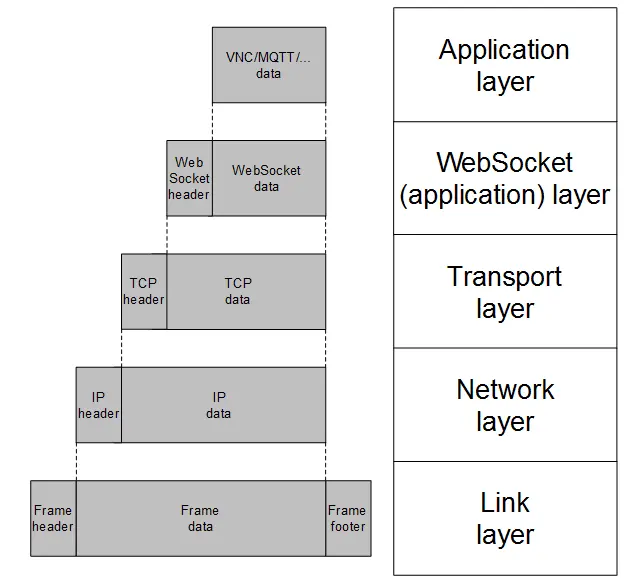
Raw WebSockets (WSS)
WSS gives you:
- A persistent, full-duplex TCP connection
- Message framing (RFC 6455)
- Binary or text frames
- TLS security
That’s it.
Everything above that layer is your responsibility.
Socket.IO
Socket.IO sits above the transport layer and provides:
- Its own application-level protocol
- Event semantics (
emit,on) - Acknowledgements
- Reconnection logic
- Heartbeats
- Rooms and namespaces
- Transport fallbacks (polling → WebSocket)
This means an important thing:
A Socket.IO message is not a raw WebSocket frame.
3. How a Message Actually Travels
Consider a simple example:
A client sends a typing_start event.
With Raw WSS
- Client serializes a message (JSON / binary)
- Sends a WebSocket frame
- Server parses it
- Your code decides:
- Ordering
- Acknowledgement
- Retry behavior
- Fan-out logic
Every guarantee must be explicitly designed.
With Socket.IO
-
Client emits an event
-
Socket.IO wraps it with:
- Packet type
- Namespace
- Event name
- Optional ack ID
-
Framework manages:
- Heartbeats
- Buffering during reconnect
- Optional retries
The trade-off is clear:
- More abstraction
- More bytes
- More CPU work
- Less protocol code for you
4. Failure, Reconnection, and Network Reality
This is where most real-time systems break.
Raw WSS
When a connection drops:
- You detect it
- You decide whether to retry
- You restore state (or not)
- You handle partial messages
- You deal with duplicate sends
Powerful — but unforgiving.
Socket.IO
Socket.IO assumes networks are unreliable:
- Automatic reconnection
- Message buffering
- Optional state recovery
- Transport fallback if WebSockets fail
This is not “convenience”.
It is explicit design for real-world networks, especially mobile and enterprise environments.
5. Scaling WebSockets in Production
Scaling real-time systems is not about libraries.
It is about infrastructure.
Common scaling problems
- Sticky sessions
- Connection ownership
- Message fan-out
- Cross-node communication
- Backpressure
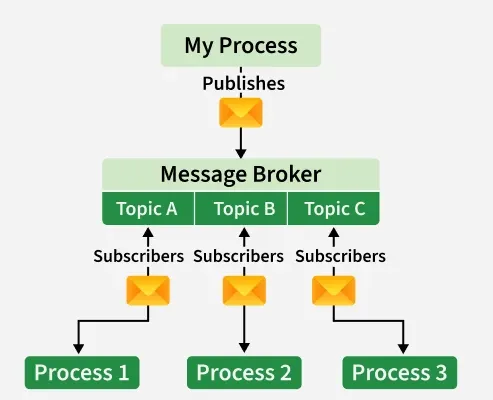
Socket.IO scaling model
- Requires sticky sessions
- Uses adapters (commonly Redis)
- Broadcasts via pub/sub
- Simplifies fan-out logic
Raw WSS scaling model
- You design the routing
- You choose pub/sub
- You control message distribution
- You manage backpressure manually
6. Performance and Overhead Trade-offs
At small scale, the difference is negligible.
At large scale, it becomes measurable.
Raw WSS
- Minimal framing
- Lower CPU per message
- Smaller memory footprint
- Lower latency floor
Socket.IO
- Extra protocol metadata
- More allocations
- Higher per-message cost
- Slightly higher latency
This does not mean Socket.IO is slow.
It means:
Socket.IO trades raw performance for protocol-level guarantees.
That trade-off is often the correct choice.
7. When Socket.IO Is the Wrong Choice
Socket.IO starts to hurt when:
- You need ultra-low latency (trading, gaming engines)
- You need custom binary protocols
- You operate at very high connection counts
- You want strict control over backpressure
- You want predictable infra cost at extreme scale
In these systems, abstraction becomes friction.
8. When Raw WebSockets Become a Liability
Raw WSS becomes dangerous when:
- Networks are unstable
- Teams are small
- Time-to-market matters
- Failure handling is under-designed
- Clients are mobile or embedded
Many “fast” systems fail not because of performance,
but because they collapse under edge cases.
A useful way to summarize the decision:
Socket.IO scales by abstracting failure.
Raw WebSockets scale by eliminating abstraction.